
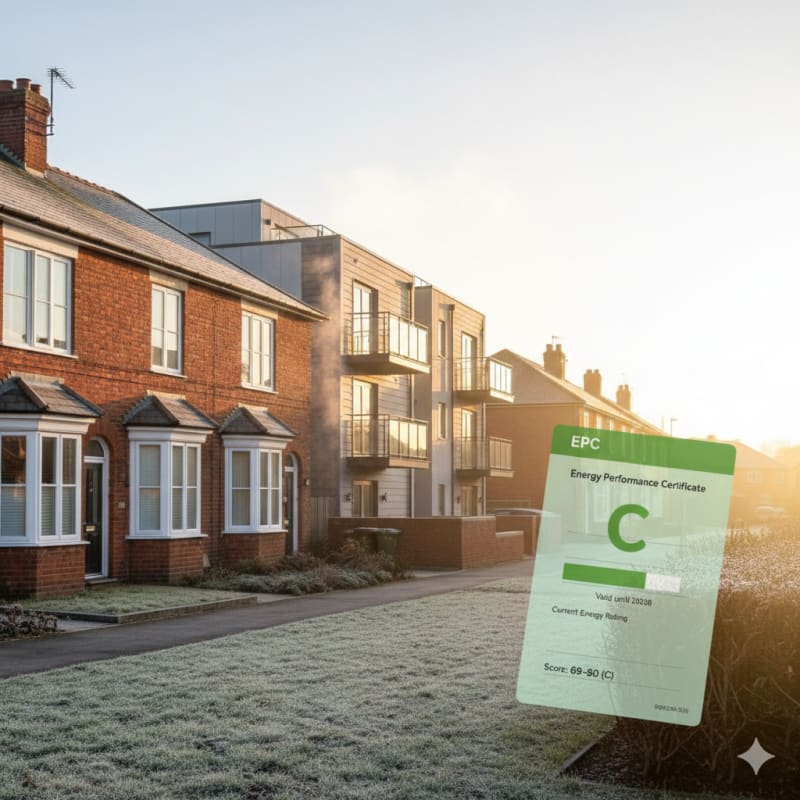
EPC C by 2030: What the New Rental Regulations Mean for UK Landlords This Year
For the UK’s 2.8 million private landlords, the energy efficiency landscape has shifted from a "suggestion" to a mandatory roadmap. Following the official confirmation of the Warm Homes Plan, the government has set a definitive target: all privately rented properties in England and Wales must achieve an Energy Performance Certificate (EPC) rating of C or above by 2030.
With 2026 serving as the "pivot year" for new measurement standards, landlords who fail to act now risk facing unlettable assets, substantial fines, and a logistical bottleneck as the deadline approaches.
The Dual-Deadline Strategy: 2028 and 2030
The new regulations are not a "big bang" implementation but a phased rollout designed to give the sector time to breathe. However, for those with high-turnover portfolios, the first deadline is closer than it appears.
- 2028: New Tenancies. Any property let to a new tenant must already meet the EPC C threshold.
- 2030: All Tenancies. Regardless of how long a tenant has lived in the property, the "floor" for legal habitation rises to Band C.
Currently, only about 48% of the private rented sector (PRS) meets this standard. This leaves nearly 2.9 million homes requiring upgrades—a volume that property experts warn could overwhelm the supply of skilled retrofitters if the market waits until 2029 to begin work.
2026: The Year the Goalposts Move
Perhaps the most significant change for landlords to grasp this year is the overhaul of the EPC methodology itself. In 2026, the government is introducing the Home Energy Model (HEM) to replace the aging RdSAP system.
This new system moves away from purely measuring "cost to heat" and prioritizes fabric performance (how well the building retains heat) and carbon emissions. This is a double-edged sword:
- The Re-Rating Risk: A property that currently holds a "soft" C rating under old rules might drop to a D under the stricter 2026 carbon-focused metrics.
- The Evidence Gap: Under the 2026 rules, assessors can no longer make "favorable assumptions." If you cannot provide invoices or photos of your underfloor insulation, the system will default to the worst-case scenario, potentially dragging your rating down.
The Financial Reality: Cost Caps and Fines
The "cost of compliance" has been a point of heavy debate. Under the previous Minimum Energy Efficiency Standards (MEES), the spending cap was a modest £3,500. Under the new 2030 framework, this is expected to rise significantly.
- The £15,000 Cost Cap: The government has proposed a maximum spend of £15,000 per property. If you spend up to this limit and your property still hasn't reached a C, you can apply for a high-cost exemption.
- The £30,000 Penalty: Non-compliance is no longer a slap on the wrist. Civil penalties for letting a sub-standard property are set to rise to £30,000 per breach. Local authorities are expected to receive increased funding to enforce these rules using data-matching from the national EPC register.
Funding Your Upgrades: The Warm Homes Local Grant (WHLG)
It isn't all "stick" and no "carrot." The Warm Homes: Local Grant (launched in 2025 and scaling in 2026) is the primary vehicle for supporting landlords.
Crucially, the WHLG provides full funding for the first property in a landlord's portfolio, provided the tenant meets low-income criteria (generally a household income of £36,000 or less). For additional properties, landlords must contribute 50% of the costs.
Additionally, the Boiler Upgrade Scheme (BUS) continues to offer £7,500 vouchers for heat pump installations, which are often the single biggest "jump" a property can make on the EPC scale.
A "Fabric First" Action Plan for 2026
To avoid the "mortgage prisoner" trap—where lenders refuse to remortgage properties with low EPCs—landlords should follow a Fabric First hierarchy this year:
- Audit & Document: Before the 2026 methodology changes, get an assessment and gather every invoice for past works.
- Insulate the Envelope: Loft insulation (minimum 270mm) and cavity wall insulation remain the highest ROI measures for moving from a D to a C.
- Upgrade the Glazing: Moving from single to high-spec double or triple glazing is now almost mandatory to hit the "fabric performance" metric.
- Decarbonize Heating: Once the building is "sealed," look at Air Source Heat Pumps or the new £2,500 grants for Air-to-Air systems to eliminate fossil fuel reliance.
Summary
The "EPC C by 2030" mandate is a clear signal that the era of the "drafty rental" is over. While the average cost of upgrades is estimated between £6,100 and £9,000, the long-term benefits include higher property valuations, shorter void periods, and protected rental yields. For the savvy landlord, 2026 is the year to transition from "monitoring" the news to "executing" a retrofit strategy.