
Are Heat Pumps Worth It? Efficiency vs Cost
Air source heat pumps are everywhere right now. You’ve probably seen them mentioned alongside government grants, rising gas prices, and plans to decarbonise home heating. But for most homeowners, the real questions are much simpler:
- What is an air source heat pump?
- Is a heat pump actually worth it in the UK?
- Will it work in my home?
This guide explains air source heat pumps in plain English, compares heat pump vs gas boiler running costs, and walks through real-world suitability for terraced houses, flats, and older homes—so you can make an informed decision before requesting a quote.
What Is an Air Source Heat Pump?
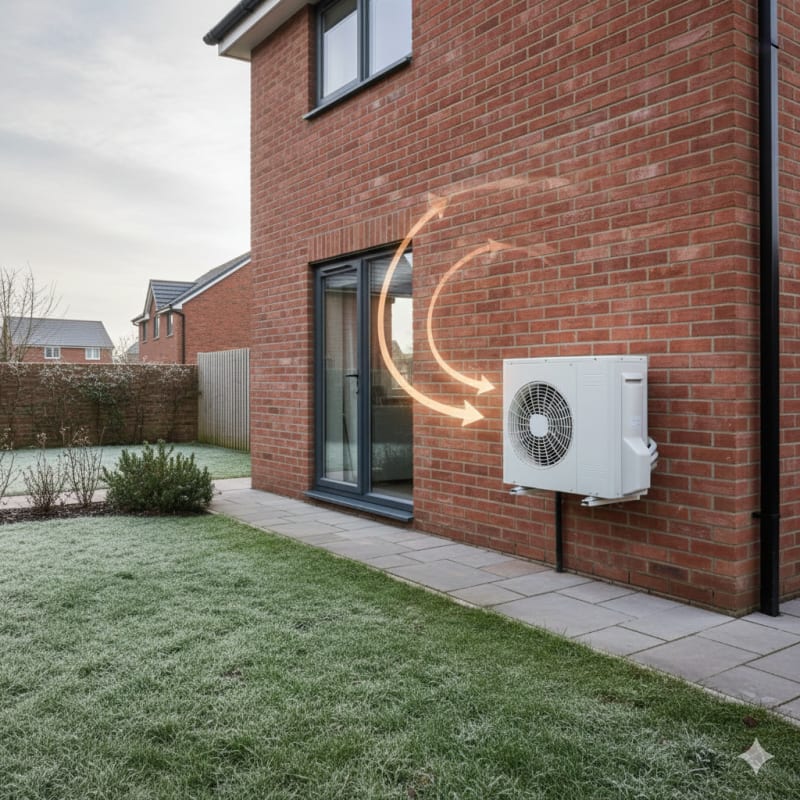
An air source heat pump is a low-carbon heating system that extracts heat from the outside air and uses it to heat your home and hot water.
Even when it’s cold outside, there’s still usable heat in the air. A heat pump captures that heat, compresses it to raise the temperature, and transfers it indoors.
In simple terms:
- A boiler creates heat
- A heat pump moves heat
That difference is why heat pumps can be far more efficient than traditional gas boilers.
How Does an Air Source Heat Pump Work?
The process is similar to a fridge—but in reverse:
- The unit pulls in outside air
- Heat is absorbed into a refrigerant
- The refrigerant is compressed to increase temperature
- Heat is transferred to your radiators or underfloor heating
- The cycle repeats
For every unit of electricity used, a heat pump can produce 3–4 units of heat. This efficiency is measured as the Coefficient of Performance (COP).
Why Heat Pumps Are Being Promoted in the UK
The UK relies heavily on gas for home heating. Heat pumps are being promoted because they:
- Reduce carbon emissions
- Cut reliance on gas imports
- Work well with renewable electricity
- Offer more stable long-term running costs
They’re also supported by the Boiler Upgrade Scheme, which offers a £7,500 grant to homeowners replacing gas or oil boilers.
Is a Heat Pump Worth It in the UK?
This is the most common—and most important—question.
The honest answer is: it depends on your home.
Heat pumps are worth it when:
- The home is reasonably well insulated
- The heating system can run at lower temperatures
- Electricity usage is efficient
- Grants and finance reduce upfront costs
They are less effective when:
- Homes are poorly insulated
- Radiators are undersized
- Heat loss is high
- Installations are rushed or poorly designed
A heat pump is a system upgrade, not a drop-in boiler replacement.
Heat Pump vs Gas Boiler: Running Costs Compared
Let’s look at typical UK running cost comparisons.
Gas Boiler (Typical)
- Fuel: Gas
- Efficiency: ~85–90%
- Annual running cost (average home): £900–£1,200
- Highly exposed to gas price rises
Air Source Heat Pump
- Fuel: Electricity
- Efficiency: 300–400%
- Annual running cost (average home): £700–£1,000 (after optimisation)
- More stable long-term pricing
The gap widens if:
- You improve insulation
- You use smart controls
- You add solar panels
Heat pumps reward efficiency.
Heat Pump Suitability Check: What Really Matters
Before considering installation, most homes should be assessed across five key areas.
1. Insulation Level
This is critical.
Heat pumps work best in homes with:
- Good loft insulation (270mm recommended)
- Insulated walls (cavity or solid)
- Minimal draughts
Poor insulation doesn’t make heat pumps impossible—but it raises running costs and reduces comfort.
2. Heat Distribution System
Heat pumps prefer:
- Larger radiators
- Underfloor heating
- Low-temperature heat delivery
Small, high-temperature radiators designed for gas boilers may need upgrading.
3. Property Type
Different homes suit heat pumps differently.
Heat Pump for a Terraced House (UK)
Yes—heat pumps can work in terraced houses, but design matters.
What Works Well
- Mid-terrace homes (less heat loss)
- Good loft and wall insulation
- Rear or side space for outdoor unit
Challenges
- Limited external space
- Noise considerations (planning rules apply)
- Older terraces may need insulation upgrades
Many UK terraced homes are already successfully running heat pumps.
Heat Pump for Flats in the UK
This is more complex—but not impossible.
When Heat Pumps Can Work in Flats
- Ground-floor or maisonette flats
- Flats with private outdoor space
- Buildings with shared or communal systems
Limitations
- Leaseholder permissions
- Outdoor unit placement
- Electrical capacity
Flats often require case-by-case assessment, and alternative low-carbon options may be suggested.
Heat Pumps in Older Houses: Are They Suitable?
Older UK homes can absolutely use heat pumps—but preparation is key.
Common Issues
- Solid walls
- Higher heat loss
- Older radiators
- Draughts
Practical Approach
- Insulation first
- Radiator upgrades where needed
- Careful system sizing
- Gradual transition rather than rushed installs
Older homes often benefit greatly—but only when treated correctly.
Noise, Space, and Planning Concerns
Modern air source heat pumps are much quieter than older models.
Typical noise:
- Comparable to a fridge or quiet conversation
- Strict UK planning noise limits apply
Most installations fall under permitted development, meaning:
- No planning permission required
- Height, distance, and noise rules must be met
Installers handle this as part of the process.
What Does an Air Source Heat Pump Cost?
Typical UK figures (before grants):
- Heat pump system: £10,000 – £14,000
- Boiler Upgrade Scheme grant: £7,500
- Net cost after grant: £3,000 – £6,500
Many homeowners use:
- Government-backed finance
- Monthly payments offset by savings
Upfront cost is often the biggest barrier—but also the most misunderstood.
Common Myths About Heat Pumps
“They don’t work in cold weather”
→ Modern heat pumps work efficiently well below freezing.
“They only work in new builds”
→ Many older homes now use them successfully.
“They’re too expensive to run”
→ Poor installs are expensive. Good installs are efficient.
“You’ll be cold in winter”
→ Heat pumps provide steady, consistent warmth—not bursts of heat.
When a Heat Pump Might Not Be Right (Yet)
Heat pumps may not be ideal if:
- Insulation upgrades aren’t possible
- Property layout prevents installation
- Budget is extremely tight without finance
- Short-term occupancy is planned
In these cases, hybrid or staged upgrades may be better.
How to Know If a Heat Pump Is Right for Your Home
The only reliable way is through a heat pump suitability check, which looks at:
- Heat loss calculations
- Existing heating system
- Insulation levels
- Property layout
- Upgrade options
Online assumptions often lead people astray—both positively and negatively.
Final Thoughts: A Powerful Tool, Not a Magic Switch
Air source heat pumps are not a silver bullet—but they are one of the most powerful tools available for cutting heating costs and future-proofing UK homes.
When designed properly, they can:
- Reduce running costs
- Improve comfort
- Lower carbon emissions
- Protect against gas price shocks
The key is suitability—not hype.
✅ Want to Check If a Heat Pump Will Work in Your Home?
You can complete a short heat pump suitability check to find out:
- Whether your home is suitable
- What upgrades (if any) are needed
- How running costs compare to gas
- What grants or finance options apply
It takes about a minute—and could save you years of guesswork.