
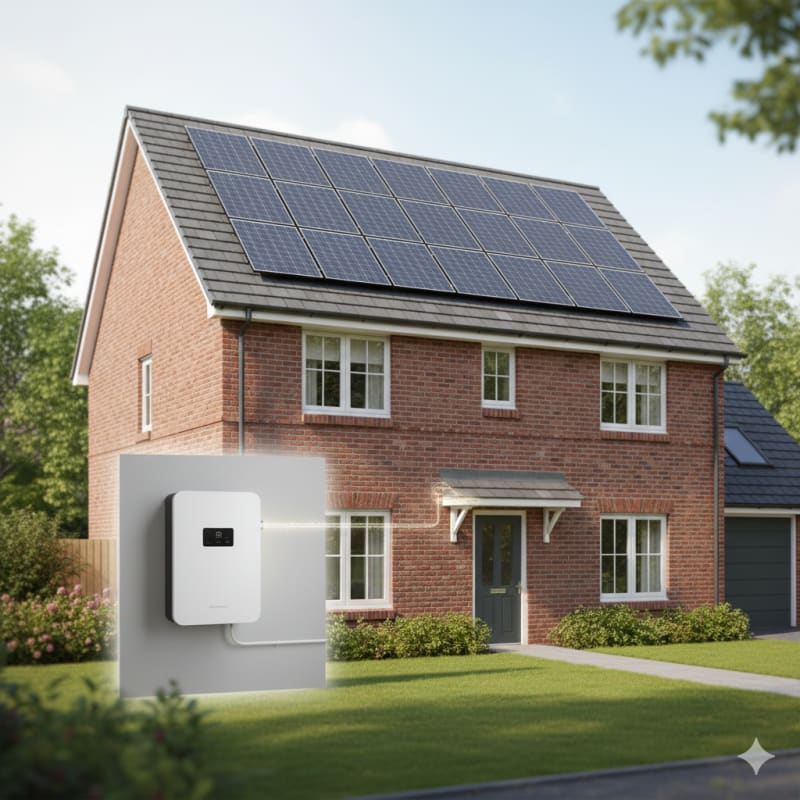
Solar Panels and Batteries in 2026: How the Warm Homes Plan Can Cut Your Bills
Solar panels used to feel like a niche upgrade—something only early adopters or new-build homes considered. In 2026, that’s no longer the case. Rising electricity prices, smarter technology, and government-backed support have pushed solar panels and batteries firmly into the mainstream.
If you’re wondering how solar panels and batteries under the Warm Homes Plan actually work, what they cost, and whether they’re worth it for your home, this guide is for you.
We’ll cover the basics of solar PV, explain when a battery makes sense, look at realistic savings, and clarify what funding, grants, or loans may be available—without hype or over-promises.
Why Solar Matters More Than Ever in 2026
Electricity prices in the UK remain volatile. Even households that have insulated well or upgraded heating systems often find that electricity costs are now the biggest part of their bill.
Solar addresses this directly by:
- Generating electricity at source
- Reducing how much you buy from the grid
- Locking in a portion of your energy costs for decades
Under the Warm Homes Plan, solar is viewed as a bill-reduction tool, not just a green upgrade.
Solar Panels Explained (Without the Jargon)
Solar panels—also called solar PV (photovoltaic)—convert daylight into electricity. You don’t need constant sunshine; panels generate power even on cloudy days.
In simple terms:
- Panels produce electricity during daylight
- Your home uses that electricity first
- Any excess can be exported to the grid
- A battery (if installed) stores unused power for later
The key benefit is self-consumption—using your own electricity instead of buying it.
Do Solar Panels Actually Work in the UK?
Yes—and better than many people expect.
While the UK isn’t sunny year-round, modern solar panels are efficient in diffuse light. The economics are driven less by sunshine and more by electricity prices.
Solar works particularly well when:
- You’re home during the day
- You have high electricity usage
- You combine panels with a battery
- You plan to stay in the property long-term
When Does a Solar Battery Make Sense?
A battery is not essential—but in many cases, it transforms the value of solar.
Without a Battery
- Excess daytime power is exported
- You still buy electricity in the evening
- Savings depend on export tariffs
With a Battery
- Excess power is stored
- Evening and night usage uses stored energy
- Grid reliance drops significantly
In short:
- Solar panels reduce bills
- Solar + battery reshapes bills
Typical Savings: Solar Panels vs Solar + Battery
Savings vary by home size, usage, and system size, but realistic UK figures in 2026 look like this:
Solar Panels Only
- Annual bill savings: £300–£600
- Self-consumption: ~30–40%
- Export income depends on tariff
Solar Panels + Battery
- Annual bill savings: £600–£1,000+
- Self-consumption: ~60–80%
- Much lower evening grid use
Batteries don’t magically double savings—but they increase how much of your own energy you use, which is where the real value lies.
Solar Payback: How Long Until It Pays for Itself?
Payback is one of the most searched questions—and one of the most misunderstood.
Typical Payback Ranges
- Solar only: 7–10 years
- Solar + battery: 9–13 years
Panels typically last 25+ years. Batteries last 10–15 years depending on usage.
This means:
- Most systems generate significant net savings over their lifetime
- Rising electricity prices can shorten payback further
Solar is not a quick win—it’s a long-term bill reduction strategy.
Free Solar Panels UK: What’s Real and What’s Not?
You may have seen ads for free solar panels UK. These offers are real in limited circumstances—but they’re not universal.
You’re more likely to qualify for fully funded solar if:
- You’re on qualifying benefits
- Your home has high energy demand
- Solar significantly reduces fuel poverty
- Other efficiency measures are in place
For most households, solar is:
- Part-funded
- Supported by grants or loans
- Installed with reduced upfront cost
The Warm Homes Plan focuses on fair access, not blanket giveaways.
Solar Battery Grants and Funding Support
Dedicated solar battery grants are less common than panel support—but batteries are increasingly included as part of whole-home upgrade packages.
Support may come via:
- Partial grants
- Bundled funding with insulation or heating
- Government-backed green loans
- Installer-led finance options
This is especially common when solar supports:
- Heat pumps
- EV charging
- High evening electricity use
Government-Backed Loans: How Solar Becomes Affordable
For households not on benefits, government-backed green loans are often the main route.
These loans are designed to:
- Spread upfront cost
- Keep monthly payments predictable
- Be offset by energy savings
Worked Example: Solar + Battery Finance
System
- 4kW solar + 5kWh battery
- Installed cost: £9,500
Finance
- £9,500 over 10 years
- Approx. £85–£95 per month
Savings
- Typical bill reduction: £70–£90 per month
Result
- Net monthly cost close to neutral
- Immediate protection from price rises
- Long-term savings after payback
This is why many households choose finance even if they have savings available.
Export Tariffs Explained (In Plain English)
If your system exports electricity to the grid, you may be paid via an export tariff.
How Export Tariffs Work
- You’re paid per unit (kWh) exported
- Rates vary by energy supplier
- Payments are usually quarterly
Typical export rates in 2026 range from:
- 5p to 15p per kWh
Export income is a bonus—not the main reason to install solar. The real value comes from using your own electricity.
Why Smart Meters Matter for Solar
A smart meter is essential if you want to:
- Track solar generation accurately
- Measure exports
- Receive export payments
- Optimise battery charging
Most installers now require a smart meter as part of the process. If you don’t already have one, this can usually be arranged.
Is Your Roof Suitable for Solar?
Roof suitability is critical and depends on:
- Orientation (south is best, east/west still good)
- Roof condition and age
- Shading from trees or buildings
- Available surface area
Even roofs that aren’t “perfect” can still deliver meaningful savings—but expectations should be set correctly.
Solar and the Warm Homes Plan: How It Fits Together
Under the Warm Homes Plan, solar is usually:
- Considered after insulation
- Combined with heating upgrades
- Offered as part of a package, not standalone
This ensures:
- Maximum savings
- Correct system sizing
- Long-term value
The plan is about smart sequencing, not pushing technology prematurely.
Common Solar Myths (And the Reality)
“Solar doesn’t work in winter”
→ It generates less, but still contributes—especially with a battery.
“Batteries aren’t worth it”
→ They’re not for everyone, but hugely valuable for many households.
“Payback takes too long”
→ Most systems pay back well within their lifespan.
“You need a south-facing roof”
→ East/west roofs often perform very well.
When Solar Might Not Be Right (Yet)
Solar may not be ideal if:
- Roof space is very limited
- Heavy shading can’t be avoided
- You plan to move soon
- Structural work is needed first
In these cases, other upgrades may deliver better returns initially.
Final Thoughts: Solar as a Bill-Control Tool
In 2026, solar panels and batteries are less about being green—and more about controlling your energy costs.
Whether through:
- Partial funding
- Government-backed loans
- Export tariffs
- Smart self-consumption
Solar has become a practical option for a wide range of UK homes.
✅ Get a Tailored Solar + Battery Quote
If you want to know:
- Whether your roof is suitable
- What size system makes sense
- How much you could save
- What funding or finance applies
You can submit your roof details and postcode for a tailored solar + battery quote from our approved installer partners.
There’s no obligation—just clear, honest guidance based on your home.
A few details now could mean lower electricity bills for decades.